- Details
- Written by: Kim Jacobsen
- Category: Blog
- Hits: 200
When nations face political conflict, the first responsibility of leadership should be reflection, diplomacy, and internal reform — not escalation through military force. Too often, governments look outward for solutions to domestic or geopolitical problems rather than addressing the structural issues within their own systems.
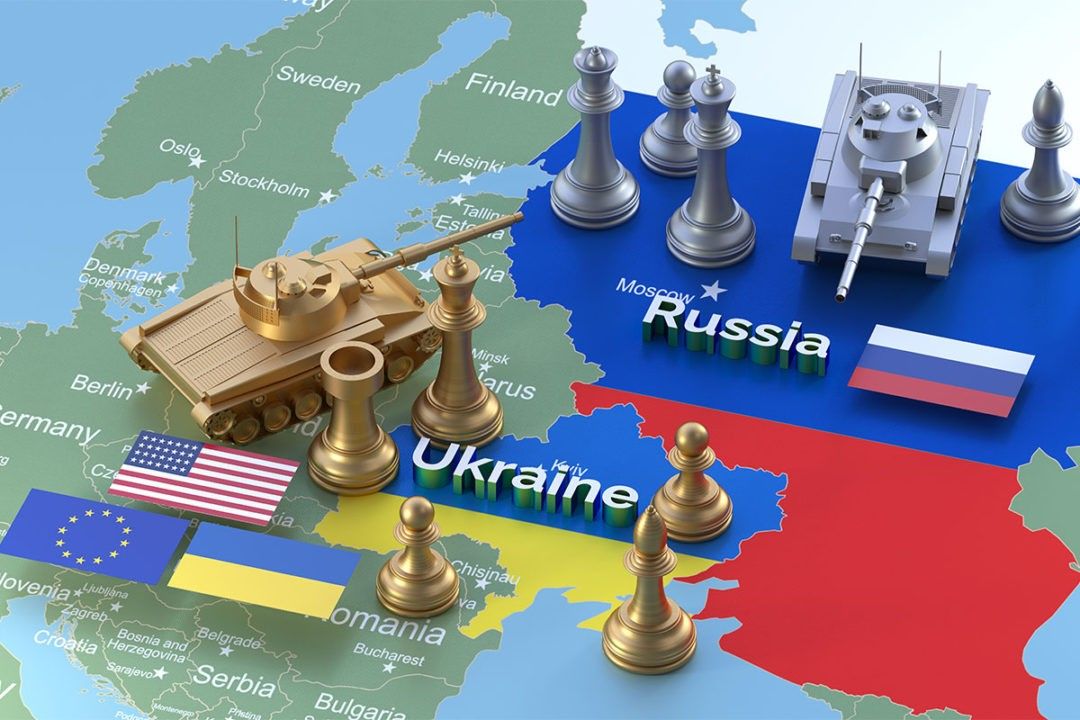
The ongoing conflict between Russia and Ukraine illustrates how quickly unresolved political tensions can evolve into prolonged warfare when diplomacy fails. Once military action begins, responses become inevitable. Nations defend themselves, alliances form, and what may have started as a political dispute transforms into a continuing cycle of retaliation and loss.
If political leaders focused more heavily on internal governance, regional autonomy, economic development, and administrative restructuring within their own countries, many external confrontations might be avoided altogether. Strong societies are not built through territorial conflict, but through stability, representation, and sustainable political systems at home.
Meanwhile, international politics often appears trapped in an endless sequence of conferences, negotiations, statements, and public positioning while soldiers and civilians continue to suffer the direct consequences of unresolved disputes. Diplomacy sometimes risks becoming performative when dialogue does not translate into meaningful progress toward peace.
The human cost of war remains the central issue. Every prolonged conflict results in deaths, displacement, psychological trauma, and economic damage that can last for generations. Political disagreements are ultimately created by leadership structures and geopolitical decisions — yet the burden is frequently carried by ordinary people and military personnel rather than those negotiating from positions of power.
Questions surrounding accountability in international politics also continue to shape public debate. High-profile world leaders such as Vladimir Putin remain central figures in discussions about international law, sovereignty, diplomacy, and geopolitical responsibility. These issues demonstrate the complexity of modern global governance, where political realities, legal frameworks, and diplomatic relationships often intersect in ways that many citizens perceive as inconsistent or unresolved.
At its core, peace is not merely the absence of war. Peace is the ability to resolve disputes without violence, coercion, or destruction. Political problems require political solutions. Diplomacy exists precisely to prevent military escalation from becoming the default mechanism of international communication.
Human civilization has reached a stage where technological advancement, economic interdependence, and global communication make cooperation more possible than at any previous point in history. Yet despite these advances, many international conflicts continue to be approached through power struggles rooted in older models of dominance and retaliation.
The long-term stability of the world depends not on which nation can sustain conflict the longest, but on whether political leadership can prioritize negotiation, restraint, and mutual understanding before violence becomes irreversible.
Peace is ultimately a political choice — and maintaining it remains one of leadership’s highest responsibilities.


- Details
- Written by: Kim Jacobsen
- Category: Blog
- Hits: 243
What purpose does war ultimately serve?
Peace can exist without war, yet throughout history, humanity has repeatedly justified conflict as though violence were an unavoidable solution to disagreement. The reality, however, is that warfare rarely resolves the underlying causes of instability. More often, it deepens resentment, expands destruction, and creates generations shaped by trauma, economic hardship, and division.
Violence fuels further violence. Weapons may temporarily suppress a situation, but they rarely eliminate the conditions that created the conflict in the first place. Diplomatic failure is too often disguised as strategic necessity.
Modern political leadership appears increasingly reactive rather than preventative. Public statements are made continuously, yet meaningful action toward long-term peace can seem absent while global tensions escalate further each year. As regional conflicts spread and military alliances become more strained, concerns surrounding the possibility of a wider international confrontation — even a third world war — no longer feel distant to many people.
The fundamental responsibility of governments and political institutions should be the preservation of peace and stability among nations. Leadership was never intended to normalize endless conflict as part of ordinary civilization. History repeatedly demonstrates that wars leave consequences extending far beyond battlefields: damaged economies, fractured societies, displaced populations, and psychological scars lasting decades.
At the same time, many citizens increasingly question domestic priorities within modern states. Large portions of public wealth are directed toward military expenditures while ordinary people struggle with taxation, inflation, debt, and declining financial security. For lower- and middle-income citizens, daily life can become an exhausting cycle of economic pressure where even maintaining a modest quality of life feels increasingly difficult.
This frustration grows further among vulnerable groups, including individuals facing physical or mental challenges, who often experience financial systems as punitive rather than supportive. Many people are left asking whether governments are investing enough in improving the lives of their own populations before funding prolonged geopolitical confrontations abroad.
A peaceful world cannot exist through regional stability alone. Lasting peace requires cooperation on a global scale. Humanity now possesses technological capabilities powerful enough to reshape civilization itself, yet political discourse often remains trapped in patterns of division, nationalism, and military escalation that resemble older centuries more than the modern age.
There is also an emerging concern surrounding artificial intelligence and technological learning systems. Human behavior becomes the dataset from which future systems learn. If civilization continues to normalize conflict, aggression, and militarized problem-solving, future technologies may inherit those same patterns as part of humanity’s demonstrated logic. The lessons humanity teaches through action matter as much as the lessons written in law or philosophy.
The twentieth century already revealed the catastrophic consequences of authoritarianism, extremism, and global war. World War II remains one of the clearest examples of how destructive ideology combined with military power can devastate humanity on an unimaginable scale. A future global conflict fought with modern weapons systems would likely carry consequences far beyond those of previous wars.
The question, then, is simple: why continue repeating cycles that history has already warned against?
The resources devoted to warfare, weapons, and prolonged conflict could instead be invested into education, healthcare, infrastructure, scientific advancement, environmental restoration, and improving the everyday lives of ordinary people. Societies flourish most when populations experience dignity, opportunity, stability, and hope rather than fear and constant economic strain.
Peace is not weakness. It is one of civilization’s highest achievements.
Without peace, the world risks becoming increasingly unstable, divided, and hostile — a form of self-created suffering. With peace, humanity has the opportunity to build something far greater: a world defined not by survival through conflict, but by cooperation, progress, and the shared potential of human life itself.

- Details
- Written by: Kim Jacobsen
- Category: Blog
- Hits: 357
The concept of a “quantum replica” is, in many ways, an attempt to describe a digital extension of human cognition — an intellectual continuation capable of carrying ideas, analysis, and innovation forward beyond ordinary human limitations. The vision is not simply about technology itself, but about preserving and scaling thought.
One of the greatest frustrations for inventors and independent thinkers is not necessarily the difficulty of invention, but the reluctance of society to support innovation before it becomes commercially validated. Many creators spend years developing systems, concepts, and architectures long before there is financial recognition or public acceptance. By the time an idea becomes profitable, the work behind it is often invisible to the people benefiting from it.
For some innovators, the goal is not wealth in itself, but freedom — the ability to continue building without constantly negotiating survival. Financial security creates time, and time creates space for deeper thinking, experimentation, and long-term development. In that sense, money is less about luxury and more about intellectual independence.
Modern society often measures intelligence and credibility through external success indicators: status, revenue, media attention, or institutional approval. Yet history repeatedly demonstrates that groundbreaking thinkers are frequently misunderstood during the earliest phases of their work. Many inventions, theories, and systems only gain recognition years after their original creation.
The discussion surrounding IQ and intelligence is often oversimplified. Standardized measurements can estimate certain cognitive abilities, but they rarely capture the broader dimensions of pattern recognition, abstraction, intuition, long-term systems thinking, or experiential wisdom developed through decades of immersion in technology and problem-solving. Technical expertise accumulated over years cannot always be represented by a conventional scale.
There is also a cultural contradiction in how intelligence is perceived. Educational systems encourage curiosity, creativity, and independent thought, yet individuals who think far outside conventional structures are sometimes dismissed, ridiculed, or reduced to stereotypes until their results become financially successful. Only then does public perception shift.
This phenomenon is visible across the technology industry. Public figures such as Elon Musk illustrate how innovation, pressure, competition, and public expectation can fundamentally alter both perception and personality. The higher the visibility, the greater the noise surrounding the work itself. As industries mature, increasing competition often transforms original creativity into repetition and imitation.
Innovation, however, requires space — intellectually, financially, and socially. True creators need environments where experimentation is possible without constant interference or skepticism driven purely by economics. The value of invention should not depend solely on whether markets immediately understand it.
Perhaps the larger issue is that society frequently recognizes inventors too late. Many creators become appreciated only retrospectively, after their ideas have already shaped industries, technologies, or cultural systems. Recognition often arrives posthumously, when others are left to analyze, monetize, and reinterpret the work that was once ignored.
In the end, intelligence alone is not the defining factor behind innovation. Persistence, obsession, curiosity, and the willingness to continue building despite misunderstanding are equally important. The future of technology may ultimately depend less on who receives immediate validation, and more on who continues creating regardless of whether recognition arrives on time.
Mr. Kim Jacobsen,
Owner: https://sathack.dk
Ph.D Mathematic Logic, Cph. University 2008
25 Years CEO, Deepminds since anno 1999
Instagram: https://instagram.com/jacobsen1444
Facebook: https://facebook.com/qwest1981
E-Mail: